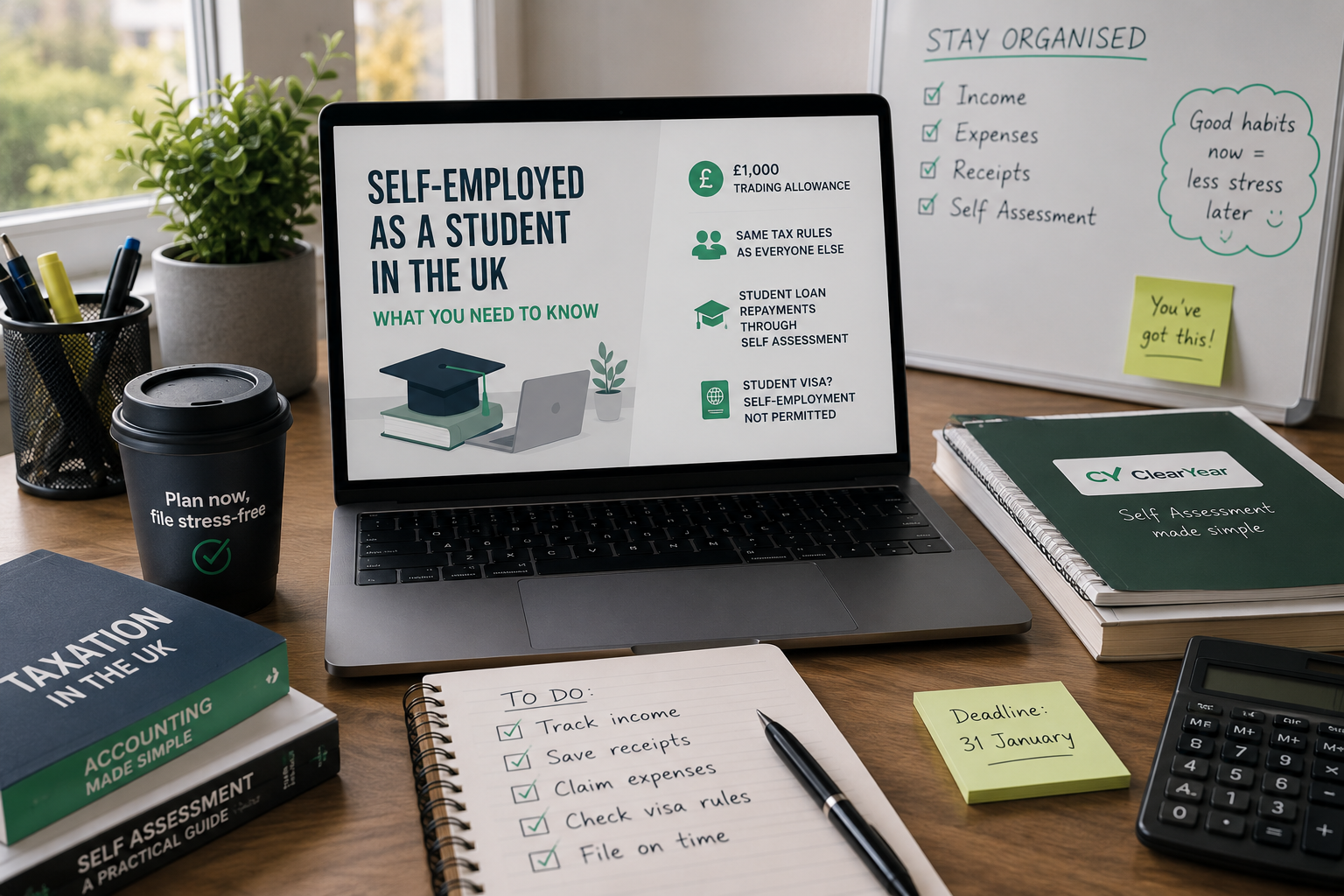
Being a student doesn't exempt you from UK tax rules. If you're tutoring, freelancing, reselling, running a small Etsy shop, or doing any other self-employed work alongside your studies, HMRC treats you exactly the same as any other self-employed person — regardless of your age or student status.
When do you need to register?
The same £1,000 threshold applies to everyone: if your self-employment income (before expenses) goes over £1,000 in a tax year, you need to register for Self Assessment and file a return. Under £1,000, you don't need to register or declare it — this is called the trading allowance.
Being a student doesn't change how much tax you pay
There's no separate "student rate" of Income Tax or National Insurance. You get the same Personal Allowance as everyone else (the amount you can earn before paying Income Tax), and the same tax bands apply. Being enrolled at university has no bearing on your tax calculation.
Student Loan repayments
If you have a UK student loan and you're self-employed, your loan repayments are collected through your Self Assessment return rather than through payroll deductions. HMRC calculates what you owe based on your profit, using the same repayment thresholds as employed borrowers.
An important exception: international students on a Student visa
If you're in the UK on a Student visa (Tier 4 or the current Student route), you are not permitted to be self-employed under your visa conditions — this includes freelancing, running your own business, or working as a sole trader. Visa holders on this route are restricted to employed work within specific hour limits, not self-employment.
This is a visa condition, not a tax rule, and it applies regardless of how small the self-employed income is. If you're unsure whether this affects you, check the specific conditions on your visa or speak to your university's international student support office before taking on any self-employed work.
UK and Irish nationals, and students with other visa types that don't carry this restriction (e.g. some settled or pre-settled status holders), aren't affected by this and can register as self-employed normally.
What counts as self-employment for a student
Common examples that count as self-employment (not casual, tax-free "hobby" income):
- Private tutoring, in person or online
- Freelance work — design, writing, coding, social media management
- Reselling items regularly for profit (not just clearing out your own old belongings)
- Content creation with monetised income (ads, sponsorships, platform payouts)
- Running any kind of small trading business, online or in person
What you can claim as expenses
The same rules apply as for any self-employed person — you can deduct genuine business costs from your income before working out your tax, such as equipment used for the work, software subscriptions, a proportion of phone or internet costs if used for the business, and materials or stock for anything you're reselling or making.
The bottom line
If you're a UK or Irish student (or hold a visa without work-type restrictions) and you're earning self-employed income over £1,000 a year, you need to register and file. If you're on a Student visa, check your visa conditions first — self-employment isn't permitted regardless of income level.