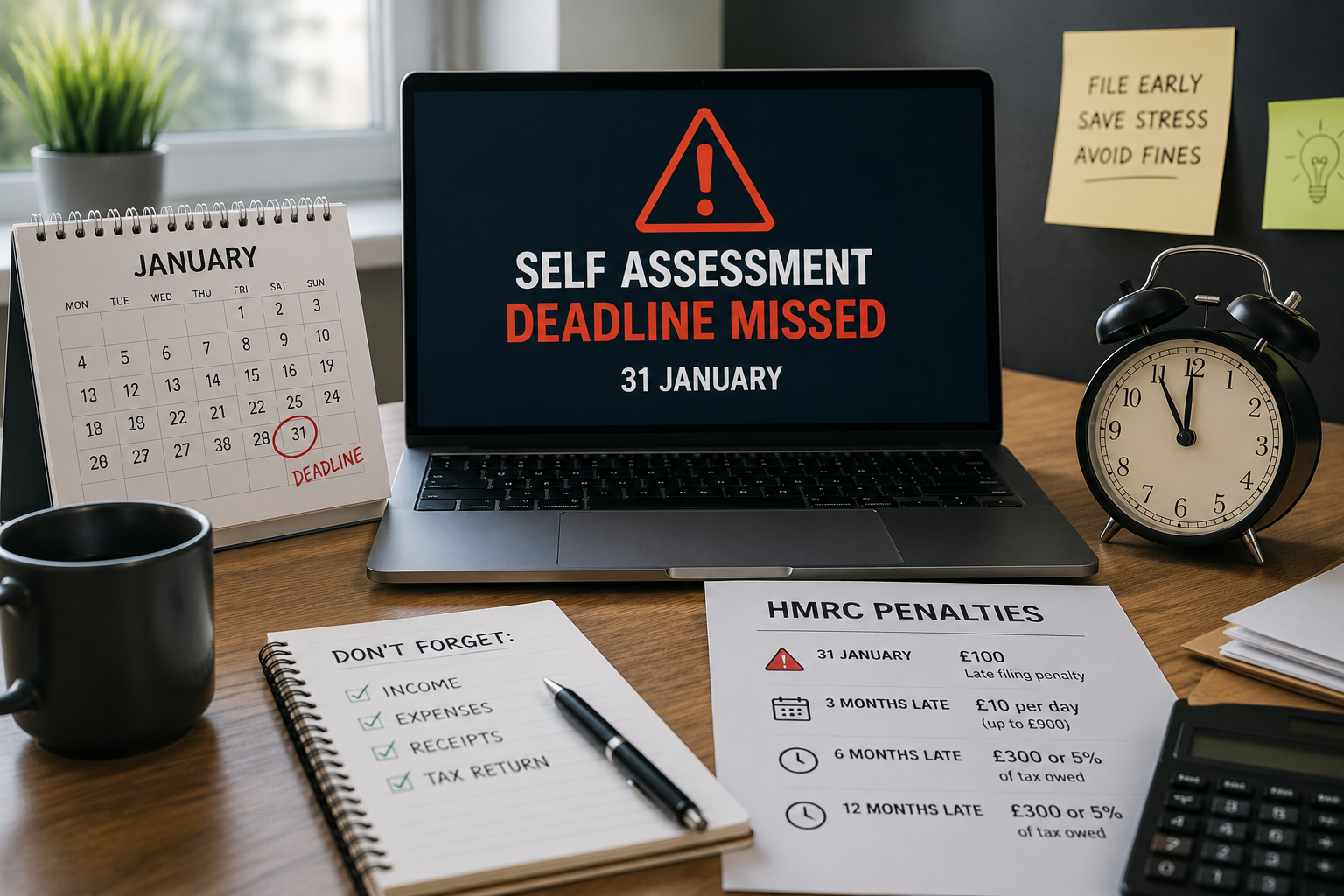
The UK Self Assessment deadline is 31 January — that's for both filing your online tax return and paying any tax you owe for the previous tax year. Miss it, and HMRC's penalty system kicks in automatically. Here's exactly what happens, in order.
The moment you miss it: £100, no exceptions
If your return isn't filed by 31 January, HMRC issues an automatic £100 penalty the very next day. This applies even if you don't actually owe any tax — even if HMRC owes you a refund. The £100 is for the late filing itself, separate entirely from any tax due.
3 months late: daily penalties start
If you're still three months late, HMRC starts charging £10 per day, up to a maximum of £900 on top of the initial £100. That's a potential £1,000 in filing penalties alone, before any tax owed is even factored in.
6 months late: another penalty on top
At six months, HMRC adds a further penalty — the higher of £300 or 5% of the tax you owe. This is on top of everything already accrued.
12 months late: it gets worse again
At the one-year mark, another penalty applies — again the higher of £300 or 5% of the tax owed. In serious cases where HMRC believes you're deliberately withholding information, this can be significantly higher.
And that's separate from unpaid tax
Everything above is for the filing being late. If you also haven't paid the tax you owe, HMRC charges interest on the outstanding amount from the day after the payment deadline, plus additional late-payment penalties at 30 days, 6 months, and 12 months.
Can you appeal a penalty?
Yes — if you have a "reasonable excuse" (HMRC's term), such as a serious illness, a family bereavement, or a genuine technical failure with HMRC's own systems, you can appeal within 30 days of the penalty notice. "I forgot" or "I was busy" generally don't count as reasonable excuses.
What should you actually do if you're already late?
File as soon as possible — the penalties above are capped at certain points, but they keep accumulating the longer you wait, so speed matters more than anything else at this stage. Filing late is always better than not filing at all, and it stops the daily penalty clock from continuing to run.
How to avoid this next year
The registration deadline for Self Assessment (if you're filing for the first time) is 5 October following the end of the tax year — separate from the filing deadline itself. Once registered, mark 31 January in your calendar the moment the new tax year starts, not the week before.
If you're self-employed — whether driving, freelancing, or running a small trade or construction work — the earlier you gather your income and expense records, the less stressful the run-up to January becomes.