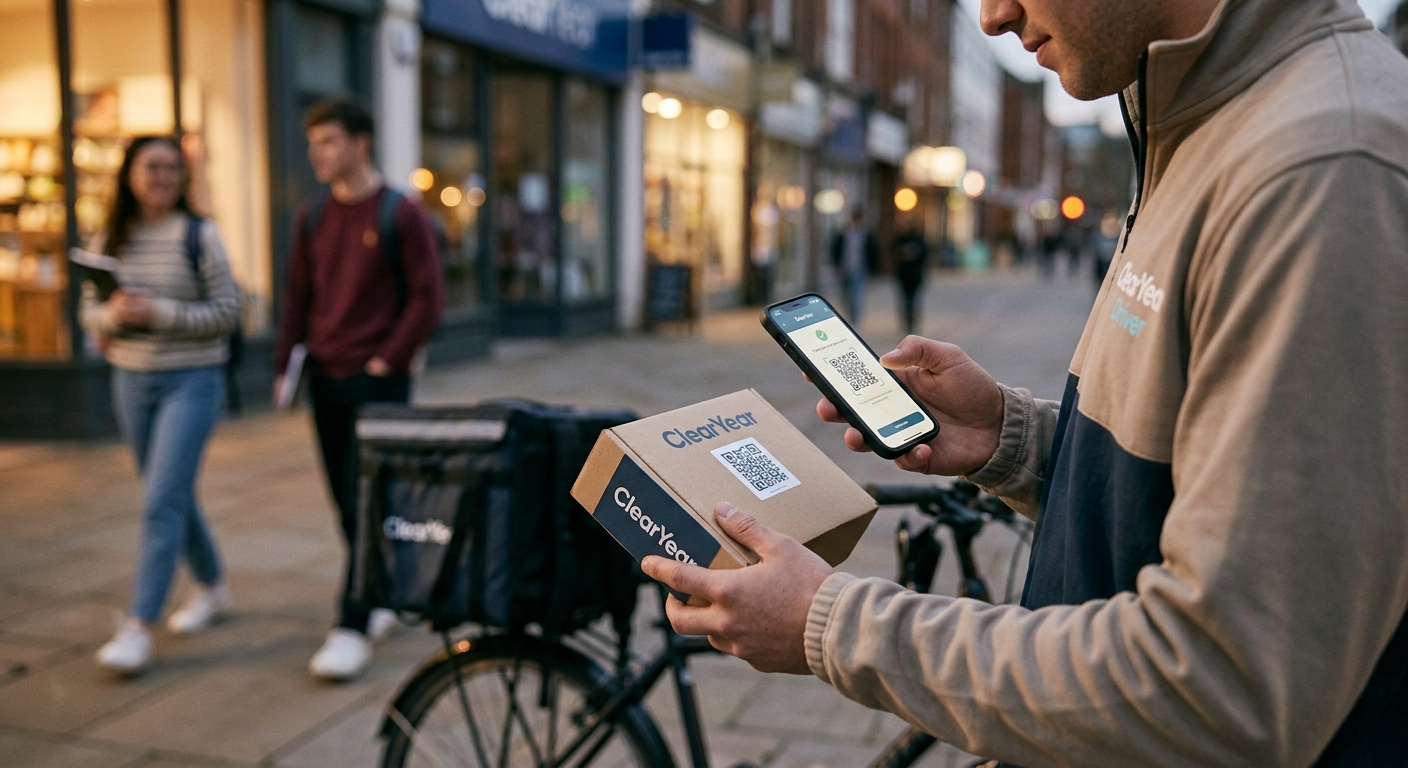
If you deliver for Deliveroo, Just Eat, Uber Eats, Amazon Flex, Evri, DPD, or any other platform where you're paid per drop rather than an hourly wage, HMRC doesn't see you as an employee — it sees you as self-employed. That means a Self Assessment tax return every year, even if delivery is just something you do a few evenings a week alongside another job.
A lot of couriers don't realise this until a letter from HMRC turns up, or a penalty has already started building. Here's what actually applies to you, and what you can claim back.
Are you self-employed as a courier?
If any of these sound familiar, HMRC almost certainly classes you as self-employed:
- You accept or decline jobs through an app, rather than being told what shifts to work
- You use your own bike, e-bike, moped, or car to make deliveries
- You're paid per delivery or per drop, not a fixed hourly wage from the platform
- You cover your own fuel, phone data, insurance, and vehicle running costs
This applies whether delivery is your main income or a side hustle on top of full-time employment or studying. Once your self-employed income passes £1,000 in a tax year, you're required to register with HMRC and file a return.
What counts as your self-employment income
Everything you earn through delivery platforms counts — not just your base fees. That includes:
- Per-drop or per-mile delivery fees
- Tips paid through the app
- Peak-time or surge bonuses
- Referral bonuses from the platform
If you deliver for more than one platform — say Deliveroo in the evenings and Amazon Flex at weekends — all of it goes on the same Self Assessment return as combined self-employment income.
Expenses you can claim as a courier
This is where most couriers leave money on the table. You're taxed on your profit, not your total earnings — so every legitimate business expense you claim directly reduces your tax bill.
- Mileage: if you use a car or motorbike, you can claim HMRC's flat mileage rate — 45p per mile for the first 10,000 business miles each year, then 25p per mile after that. For bicycles and e-bikes, the rate is 20p per mile.
- Vehicle running costs: if you don't use mileage rates, you can instead claim a business-use share of fuel, servicing, repairs, and insurance — but you can't use both methods for the same vehicle in the same year.
- E-bike and bicycle costs: purchase cost, batteries, chargers, locks, and repairs, where the bike is used for deliveries.
- Insurance: courier or hire-and-reward insurance required by the platform you work for.
- Phone and data: the business-use portion of your phone bill — you need the delivery app running to work.
- Kit and equipment: delivery bags, high-vis clothing, lights, and safety equipment bought specifically for the job.
- Parking and tolls: reasonable parking and toll charges incurred while making deliveries.
Keep receipts and a simple mileage log as you go — it's far easier than trying to reconstruct a year's worth of deliveries in January.
Key deadlines for couriers
- 5 October: deadline to register for Self Assessment if this is your first year of self-employed income.
- 31 January: deadline to file your return online and pay any tax owed for the previous tax year (6 April – 5 April).
- Payments on account: if your tax bill is over £1,000, HMRC may ask for advance payments toward next year's bill, split between 31 January and 31 July.
Miss the January deadline and HMRC applies an automatic £100 penalty — even if you don't actually owe any tax.
Why couriers choose ClearYear
ClearYear was built for exactly this kind of income — app-based, mixed platforms, mileage-heavy expenses. The driver rate (£24.99) applies to any delivery, courier, or taxi income, with no verification needed: select Driver, enter your earnings and mileage, and we calculate what you owe, apply the right expenses, and file directly with HMRC — no accountant, no spreadsheets, no jargon.